
APPROVED PAINT CORRECTION SPECIALIST
Eliminating deep swirl marks, harsh oxidation, and persistent clear-coat haze through surgical multi-stage machine refinement. Restoring authentic reflection, razor-sharp depth, and flawless mirror clarity to Tampa's finest vehicles.
5+ Years Experience
Remove Moderate To Light Imperfections
Prep For Ceramic Coating
Vehicle-Specific Recommendations
IMMEDIATE CORRECTION OUTCOMES
Reveal a Clearer,
Glossier Finish
Precision machine polishing carefully refines the surface without compromising structural clear coat margins.
Improve Paint Clarity
Removes surface oxidation and dull film to reveal true color depth. Final clarity depends on existing clear coat integrity and history.
Enhance Gloss and Reflections
Levels micro-textures to deliver sharper image reflection and deep gloss. Total luster gain is subject to initial factory paint quality.
Reduce Suitable Swirls and Haze
Substantially eliminates wash marring and fine haze within safe paint limits. Deeper scratches require pre-service thickness gauge checks.
Prepare the Finish for Agreed Protection
Strikes an optimal mechanical surface profile for ceramic coatings or sealants to bond firmly, ensuring expected protection longevity.
OPTICAL CLARITY & RESTORATION
What Is Paint Correction?
Paint correction is the precision mechanical leveling of an automobile's clear coat using dual-action or rotary polishers and microscopic diminishing abrasives. Rather than temporarily masking blemishes with silicone glazes or fillers, the procedure permanently refines the microscopic profile of the clear coat to restore true optical depth, razor-sharp reflections, and deep gloss.
- Swirl Marks: Web-like circular micro-abrasions typically induced by improper contact washing and towel drying.
- Wash Marring: Linear drag scratches and micro-friction scuffs accumulated from automatic tunnel car washes.
- Rotary Buffer Haze: Murky trails, compounding holograms, and milky reflections left behind by low-grade machine polishing.
- Light Clear-Coat Scratches: Isolated surface gouges that remain completely within the uppermost clear resin layer.
Technical Boundary Notice: Paint correction is strictly a subtractive leveling process performed on your vehicle's existing clear coat. It does not re-spray missing pigment, repair primer-level stone chips, or remedy active clear coat delamination (peeling). Defects penetrating below the clear layer require body-shop respray.
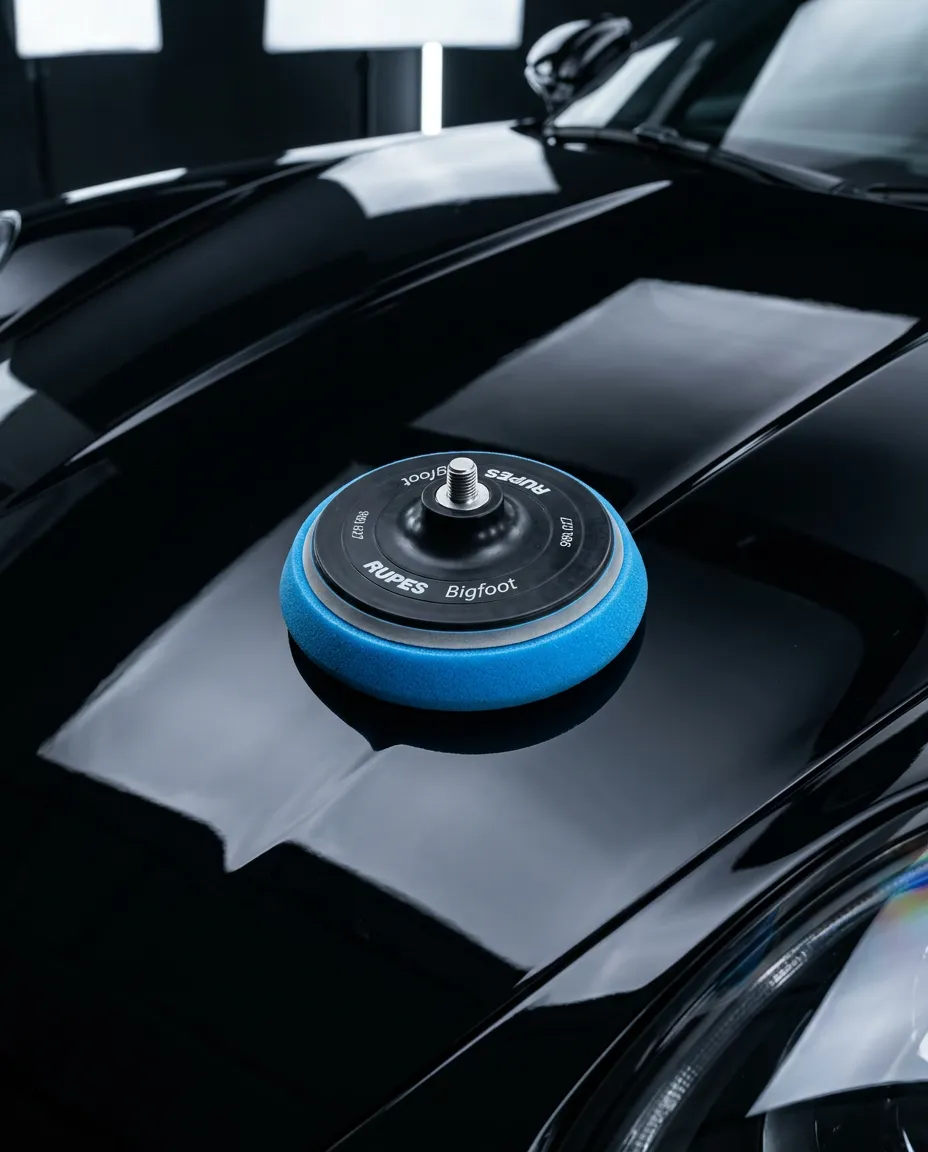
EXAMPLES OF PROFESSIONAL COMPOUND AND POLISH BRANDS
Professional Polishing Products
Specific compounding pads, micro-abrasives, and finishing chemicals are strictly determined by test spot evaluation. Clear coat density, paint thickness, and surface defect profile dictate our exact tool and compound combination.
THE 12-PHASE METHODOLOGY
Paint Correction,
Start to Finish
Our multi-stage paint correction protocol is an uncompromising, micrometer-calibrated journey. We systematically eliminate swirl marks, oxidation, and optical defects without endangering clear coat longevity.
- Non-destructive paint depth micrometer gauge
- Dual-action micro-abrasive jeweling finish
- Zero rotary holograms or machine haze
- High-CRI optical inspection audit
Trusted across Tampa for exotic and collector vehicle restorations.
STEP 01 // DIAGNOSTIC & MAPPING
Ultrasonic Paint Depth Mapping
Digital gauge readings across all metal and composite panels map clear coat thickness, flagging repainted panels and establishing precise polishing safety thresholds.
STEP 02 // NON-CONTACT PREPARATION
pH-Neutral Citrus Foam Pre-Wash
High-lubricity foam encapsulates abrasive road film and loose grit, allowing touchless dissolution that prevents early surface micro-scratching.
STEP 03 // CONTACT DECONTAMINATION
Two-Bucket Wash with Grit Filters
Hand washing using plush microfiber wash mitts and multi-tier bucket grit traps ensures loose particulates are continuously isolated from panel contact.
STEP 04 // CHEMICAL DISSOLUTION
Ferrous Iron & Fallout Dissolution
Specialized pH-balanced fallout neutralizer chemically binds to and liquifies sintered brake dust and industrial iron deposits lodged in the pores of the clear coat.
STEP 05 // MECHANICAL PURIFICATION
Synthetic Clay Bar Decontamination
Fine-grade detailing clay shears off stubborn tree sap, airborne overspray, and environmental contaminants to leave paint completely glass-smooth for the machine pads.
STEP 06 // SEAMLESS DE-WATERING
Filtered Heated Forced-Air Drying
Heated, filtered twin-stream airflow extracts trapped moisture from mirror pivots, emblems, and window seals, preventing water drip-out during rotary and DA polishing passes.
STEP 07 // TRIM & RUBBER SHIELDING
High-Precision Automotive Trim Masking
Low-tack specialist tape isolates exterior rubber seals, plastic moldings, badges, and razor-thin body creases from compound stains and buffer edge burn.
STEP 08 // FORMULA CALIBRATION
Test Spot Matrix & Pad Calibration
We rigorously test pad densities, machine orbits, and micro-abrasives on a discrete test section to dial in the least-aggressive formula that guarantees defect removal.
STEP 09 // DEFECT ELIMINATION
Primary Heavy Micro-Abrasive Cut
High-torque long-throw machine compounding permanently levels severe car wash scratches, oxidation, mineral etching, and random isolated deep scratches (RIDS).
STEP 10 // OPTICAL CLARITY
Secondary Micro-Finishing & Jewel Polish
Jeweling compounds on ultra-fine closed-cell foam pads refine all compounding micro-haze, generating true depth of color and razor-sharp mirror gloss.
STEP 11 // VERIFICATION AUDIT
IPA Residue Wipe & High-CRI Inspection
Sterilizing panel-prep alcohol spray lifts all carrier oils and polishing lubricants. Scrutiny under 98+ CRI LED spot lamps exposes pure bare paint, proving true defect correction.
STEP 12 // LOCK-IN & FINAL HANDOFF
Ceramic Sealant & Client Verification Handoff
Application of a hydrophobic ceramic bonding layer seals newly perfected clear coat from environmental fallout, accompanied by an in-person multi-spectrum lighting inspection walkthrough.
TRANSPARENT STANDARDS
What Correction Cannot Repair
Machine polishing works by leveling micro-scratches within the factory clear coat layer. When paint damage breaches the clear coat or degrades the underlying resin, abrasive leveling cannot restore the surface. Compromised panels require individual assessment, targeted touch-up, or dedicated bodyshop respray methods rather than mechanical correction.
Comprehensive micron-depth gauge assessment included with every inspection.
Missing Paint & Rock Chips
When road debris punctures the color basecoat exposing raw primer or metal, mechanical compounding cannot fill missing pigment. These require factory-matched precision touch-up or spray blending.
Scratches Through Finish
Deep gouges that catch a fingernail have cut entirely through the clear coat. While compounding rounds the sharp scratch edges to reduce visibility by 60-80%, full elimination is physically impossible without repainting.
Failing Clear Coat
Oxidation turning white, delaminating, or flaking indicates the clear coat resin has disintegrated from UV exposure. Polishing compromised clear coat accelerates failure. These panels must be stripped and repainted.
Permanent Etching
Bird droppings and industrial fallout left baking under Florida sun chemically burn through the clear coat. Stage-2 correction can reduce surface haloing, but deep craters that reach the basecoat remain visible.
CLIENT ALIGNMENT & STANDARDS
Get the Most From Your Correction
Paint correction is a delicate subtractive discipline. Aligning on realistic expectations and safe stewardship protects both clear coat depth and long-term gloss clarity.
RECOMMENDED MINDSET
What You Should Do
Set your vehicle up for sustainable clarity by collaborating with our certified paint refinement specialists before work begins.
- Discuss realistic defect removal percentages and finish goals during your initial pre-inspection.
- Disclose any prior repaints, blended clear coats, or spot repairs across body panels.
- Prioritize clear coat preservation over chase-to-metal perfection to protect UV integrity.
- Commit to two-bucket contactless foam wash routines to maintain mirror-grade clarity.
CRITICAL MISCONCEPTIONS
What You Must Avoid
Avoid common pitfalls and harmful detailing myths that jeopardize factory clear coat thickness and induce severe micro-marring.
- Never expect severe gouges or rock chips that cut through the primer to polish out.
- Never assume heavier, harsher compounding stages are automatically better for daily drivers.
- Never dry-wipe dust or water spots with a quick detailer towel on unwashed panels.
- Never run your freshly corrected vehicle through abrasive spinning-brush automatic car washes.
POST-SERVICE CARE MANUAL
Maintain Your Corrected Finish
A multi-stage correction restores optical depth, but clear coat durability depends entirely on subsequent washing habits. Friction-free washing protocols insulate the refined surface against micro-marring and wash-induced swirl reappearance.
- Two-Bucket Method with Grit Guards: Segregate rinse water to prevent trapped particulate from grinding across the paintwork.
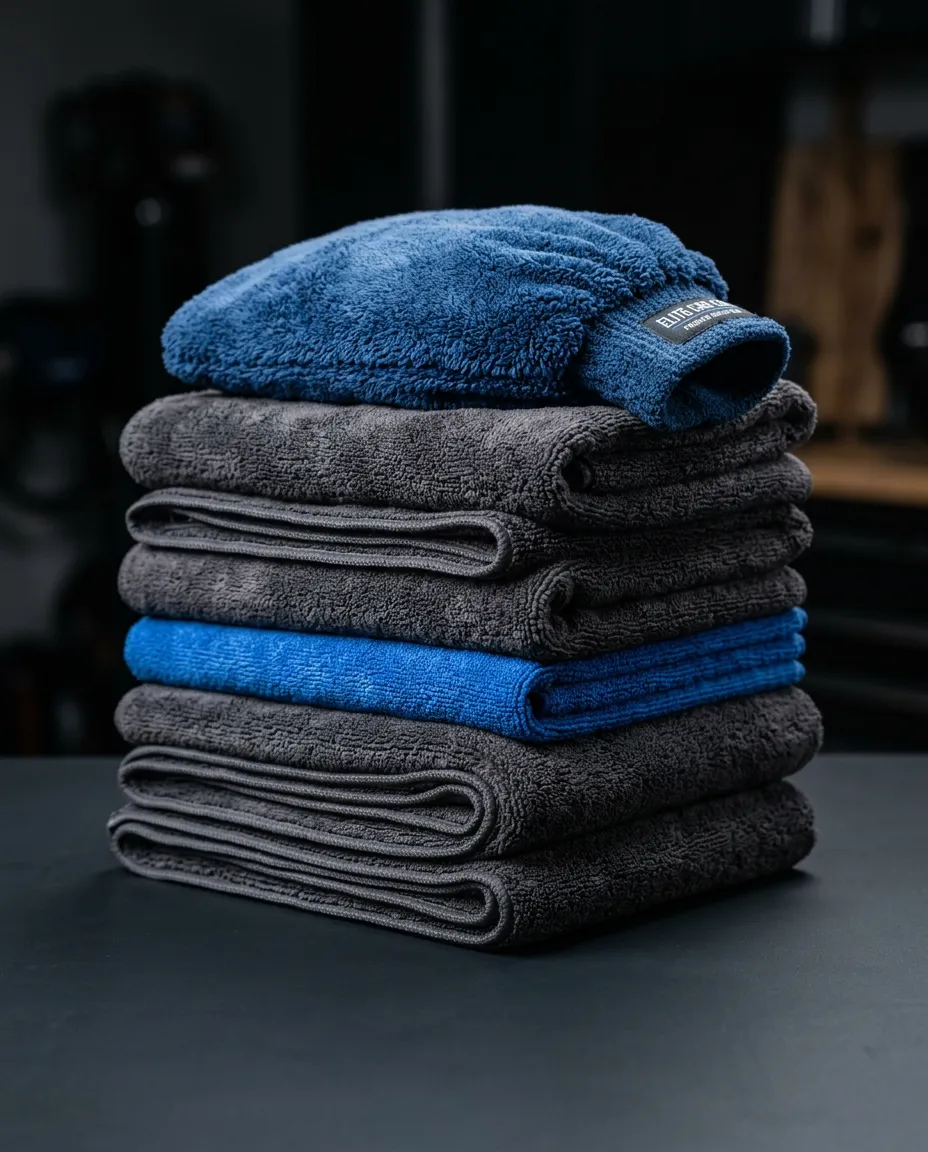
- Plush Microfiber Wash Mitts: Utilize ultra-soft synthetic or merino wool mitts that encapsulate dirt within deep fibers.
- Dedicated High-Lubricity Shampoos: Use pH-neutral formulas engineered to encapsulate surface grit without stripping protective coatings.
- Touchless Forced-Air or Towel Blotting: Dry using warm filtered air or a thick 1100 GSM drying towel pressed lightly without lateral dragging.
- Strict Avoidance of Automated Brushes: Mechanized nylon brush tunnels inflict aggressive rotational scratching within seconds.
Preservation Principle: Every point of physical contact with clear coat carries abrasion risk. Clean tools, minimal pressure, and correct chemistry ensure the mirror reflection remains intact for seasons ahead.
PRICING ARCHITECTURE
What Determines Your Quote?
We do not guess or offer flat rates. Every commission is calibrated to paint depth readings, panel surface area, and your target correction percentage.
Vehicle Size
Square footage of painted surface area dictates machine operating hours and compound volume across coupés, crossovers, or lifted heavy-duty trucks.
Paint Condition
Severity of automatic car wash marring, hard water mineral etching, and UV oxidation determines how aggressively panels must be leveled.
Defect Depth
Microscopic ultrasonic gauge readings measure whether scratches reside in superficial top clear coat or approach the structural threshold of the primer.
Finish Type
Factory paint hardness varies drastically. Ultra-hard German ceramic clears demand diamond pads; soft Japanese clears need micro-finishing pastes.
Previous Repairs
Previous body shop resprays, soft blend lines, or rotary holograms from aggressive detailing require individualized pad and compound tailoring.
Desired Improvement
Whether you want a high-gloss 65% defect removal for a daily driver or true 95%+ optical reflection for a concours collector vehicle.
Suitable Stages
Single-stage polish, two-stage cut and refine, or multi-phase rotary wet sanding determines the exact technician hours committed to the vehicle.
Agreed Protection
The post-correction locking layer selected — whether a 12-month synthetic sealant or a certified 5-year 9H ceramic coating system.
In-person digital paint meter evaluations available at our Tampa studio.
GEOGRAPHIC COVERAGE
Serving Tampa Bay Communities
Specialized paint correction delivered throughout the tri-county area with studio drop-off and dedicated regional service.
Hillsborough County
Central hub and surrounding suburban metro areas.
- Downtown Tampa & Channelside
- South Tampa & Hyde Park
- Westchase & Town 'n' Country
- Carrollwood & Northdale
- Brandon & Riverview
- Lutz & Cheval
- Temple Terrace
Pasco County
Fast-growing northern corridor and residential districts.
- Wesley Chapel & Wiregrass
- Land O' Lakes & Connerton
- Trinity & Champions Club
- Odessa & Keystone
- New Port Richey
- Zephyrhills
- Dade City
Pinellas County
Coastal peninsula, coastal communities, and west bay.
- Downtown St. Petersburg
- Clearwater & Clearwater Beach
- Palm Harbor & East Lake
- Dunedin & Safety Harbor
- Largo & Belleair
- Tarpon Springs
- Seminole & Gulf Beaches
Located outside these counties? We regularly welcome multi-stage paint correction clients from Lakeland, Sarasota, Bradenton, and Hernando County.
TRANSPARENCY & CLARITY
Paint Correction FAQs
Quick, honest answers about what paint correction can (and can’t) improve—so you can choose the right approach for your vehicle.
What is paint correction?
Paint correction is a machine-polishing process that refines certain surface defects in the top layer of the finish to improve clarity and gloss. The right pad, polish, and technique are chosen based on the paint and the improvement goal.
Is it different from waxing?
Yes. Waxing and sealants add a temporary layer on top of the paint. Paint correction focuses on refining the paint itself; protection (wax, sealant, or a coating) is something you may choose to add after correction depending on the agreed service.
Can it remove every scratch?
No. Some deeper scratches and defects may remain. If a defect is too deep, chasing it aggressively can compromise the finish—so preserving the paint takes priority over removing every mark.
What is one-step versus multi-stage correction?
One-step correction uses a single polishing stage to improve gloss and reduce suitable defects. Multi-stage correction uses a more involved approach (correction plus refinement) when the paint condition and agreed scope call for it.
Does polishing remove some of the finish?
Yes. Paint correction works by removing a small amount of the existing finish to refine defects. That’s why the process should be tailored to the vehicle’s condition, finish type, and a realistic improvement goal.
Can new vehicles need correction?
They can. Even newer vehicles may show wash marring, light swirls, or haze depending on transport, prep, and early washing habits. An assessment helps determine whether correction is worthwhile.
Can black paint be corrected?
Yes—black paint can respond very well to correction, but it can also show defects more easily. The correction approach is selected based on paint condition and the desired finish quality.
Can oxidation be improved?
Sometimes. If the oxidation or dullness is in a layer that can be safely refined, correction can improve clarity. If the finish is compromised or the clear coat is failing, correction may not be appropriate.
Can rock chips be polished away?
No. Rock chips are missing paint. Polishing can improve the surrounding area, but it can’t replace paint that’s been removed.
Can correction repair failing clear coat?
No. If the clear coat is peeling, delaminating, or failing, polishing won’t repair it. In those cases, an assessment may point toward paint repair or refinishing instead of correction.
How much does it cost?
Cost depends on your vehicle size, paint condition, defect depth, finish type, previous repairs, and the correction approach that makes sense for your goals. We recommend requesting an assessment so we can provide a vehicle-specific quote.
How long does it take?
Timing depends on the vehicle, paint condition, and the agreed correction scope. After an assessment, we can give you a realistic timeframe based on what your finish needs.
Can swirl marks return?
They can. Correction improves the finish, but future washing and drying habits can reintroduce swirls over time. Good maintenance helps keep the finish looking its best.
How should I wash afterward?
Use gentle wash methods, clean tools, and careful drying to reduce new marring. We’ll share aftercare guidance based on your vehicle and any protection that’s applied as part of the service.
Is correction suitable for matte or satin paint?
Matte and satin finishes require individual assessment. Polishing can change the way these finishes look, so we’ll help you choose an approach that respects the finish type.
Can I request an assessment from outside Tampa?
Yes. If you’re coming from a surrounding Tampa Bay community (or a bit farther), you can still request an assessment—share your vehicle details and what you’d like to improve.
Need a Specific Answer?
Have a custom paint setup, delicate vintage lacquer, or unique finish question? Our detailing specialists provide direct technical advice without automated sales bots.
Direct desk: [email protected]
PRECISION INTAKE
Request Your Paint Assessment
Every clear coat has a distinct thickness profile and damage threshold. Submit your vehicle specifications below for a prompt, data-backed diagnostic plan and guaranteed quote.
- Digital micrometer clear coat depth verification
- Defect severity analysis: swirl marks, holograms, and etching
- Tailored stage recommendation with firm, itemized pricing
Need urgent turnaround or track day preparation?
Direct master tech line : Mon-Sat 8am - 6pm
Assessment Request Dispatched
Our master correction specialist is reviewing your paint specifications. You will receive an initial diagnostic breakdown shortly.
Ali’s Car Detailing
5555 W Linebaugh Ave, Tampa, Florida 33624
(813) 945-4054 • [email protected]
© 2026 Ali’s Car Detailing. All rights reserved. Precision Paint Correction & Surface Protection.